The Ultimate Guide to Dental Case Acceptance
Introduction: Unlocking Your Practice's Hidden Revenue
In the dynamic world of dentistry, clinical excellence is paramount. Yet, even the most skilled practitioners often face a significant challenge: converting diagnosed treatment plans into accepted cases. This isn't a reflection of your clinical ability, but rather a systemic issue that can silently erode your practice's profitability and impact patient health outcomes. At Case Acceptance System™, we believe that a predictable, repeatable, and scalable system for case acceptance is the cornerstone of a thriving dental practice.
This comprehensive guide will walk you through the foundational principles and actionable strategies to transform your case acceptance rates, empower your team, and ultimately, unlock the hidden revenue already present within your patient base.
Section 1: Understanding the Case Acceptance Gap
The Silent Epidemic: Why Patients Don't Say "Yes"
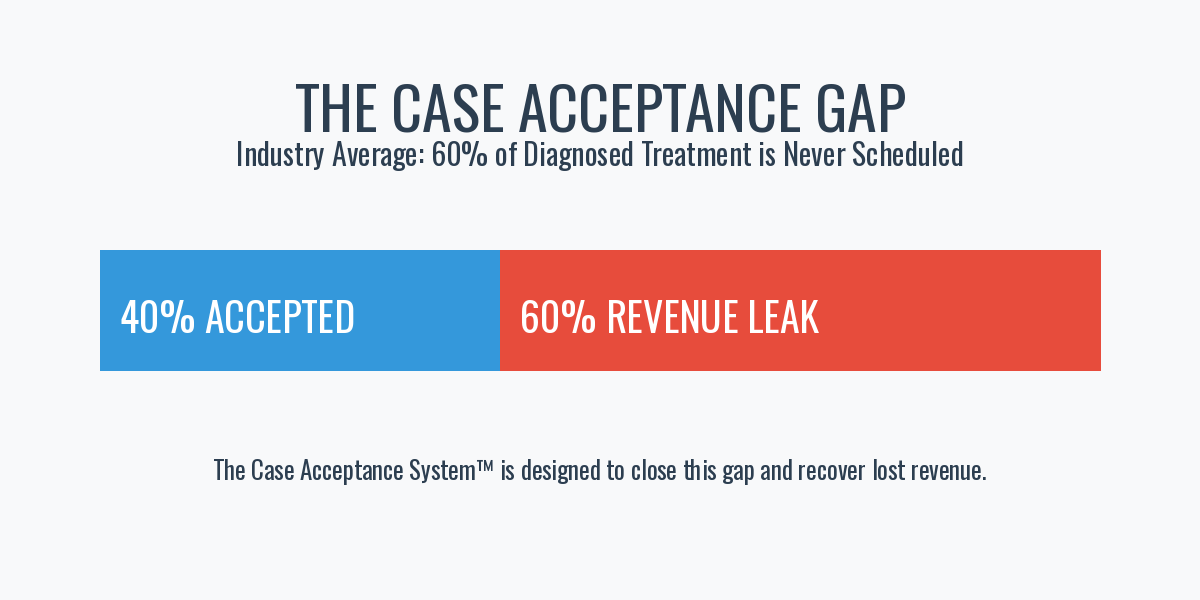
It's a startling statistic: industry data shows that up to 60% of treatment plans presented in dental offices are never scheduled. This isn't a patient problem; it's a system problem. Patients don't inherently object to necessary treatment; they object to unclear value, perceived high cost without understanding the benefit, or a lack of trust in the process. We'll explore the common pitfalls that lead to this gap and how to identify them within your own practice.
Common Pitfalls:
Lack of a structured case presentation process.
Over-reliance on the doctor for all communication.
Inadequate financial coordination and options.
Failure to address patient concerns and objections effectively.
Poor follow-up systems for unscheduled treatment.
The True Cost of Unaccepted Treatment
Beyond the obvious loss of revenue, unaccepted treatment leads to:
Declining Patient Health: Delayed treatment often results in more complex and costly issues down the line.
Team Demoralization: A constant struggle to convert cases can lead to burnout and frustration among your team.
Stagnant Practice Growth: Without consistent case acceptance, your practice struggles to reach its full potential, regardless of new patient flow.
Section 2: The Case Acceptance System™ Framework
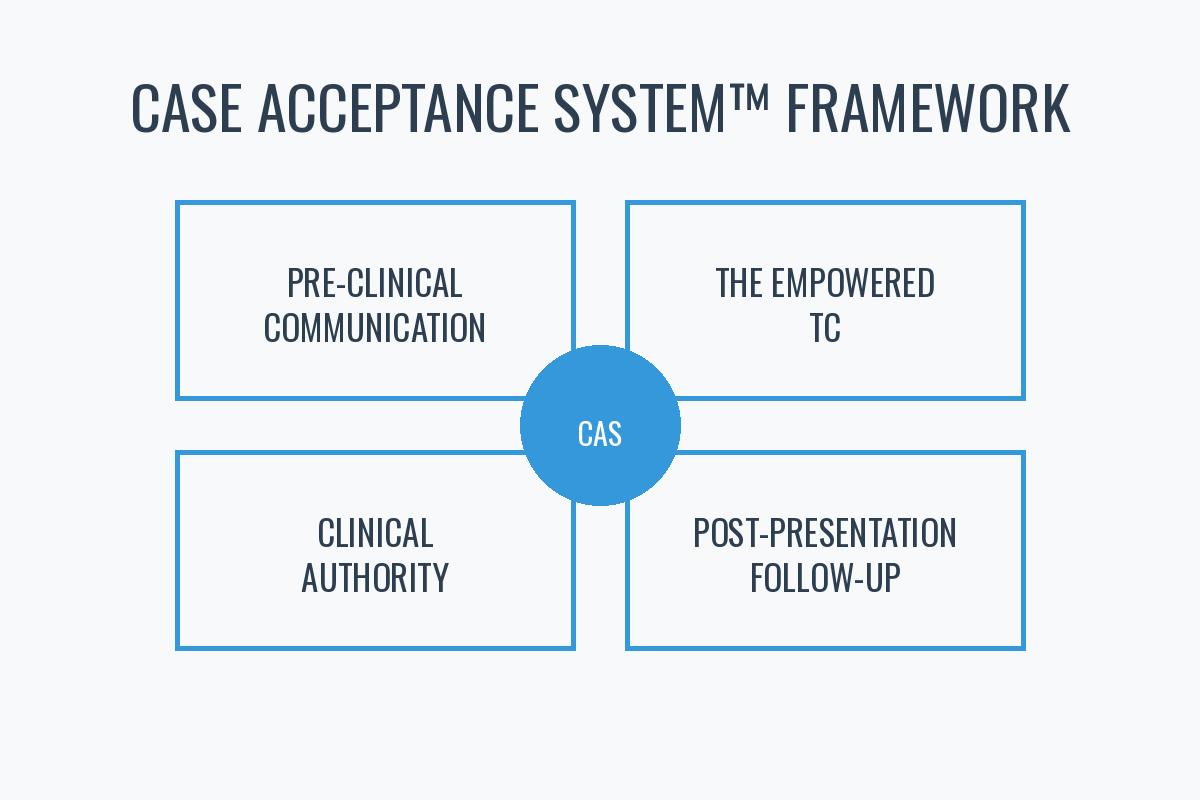
Our proprietary framework is built on core pillars designed to create a seamless, patient-centric journey from diagnosis to acceptance.
Pillar 1.1: Pre-Clinical Communication & Education
Case acceptance begins long before the patient sits in the chair. It starts with effective pre-appointment communication that educates, builds trust, and sets expectations.
Strategies:
Automated Patient Onboarding: Use welcome emails and digital forms to set the tone before the visit.
Benefit-Oriented Messaging: Frame treatment in terms of long-term health benefits, not just clinical features.
Patient Testimonials & Social Proof: Leverage reviews to build trust before the first consultation.
Pillar 1.2: The Empowered Treatment Coordinator
The Treatment Coordinator (TC) is the linchpin of successful case acceptance. They are not just schedulers; they are educators, advocates, and financial navigators.
Key Responsibilities:
Patient Advocacy: Building rapport to understand the patient's "why."
Treatment Plan Presentation: Presenting options clearly and focusing on the "why" behind the "what."
Financial Coordination: Discussing arrangements, insurance, and flexible payment plans with confidence.
Objection Handling: Addressing concerns with empathy and clarity.
Pillar 1.3: Doctor's Role: Clinical Authority & Trust Builder
The doctor's role is to diagnose, educate clinically, and build unwavering trust. They set the stage for the TC to finalize the case.
Key Actions:
Clear Diagnosis & Prognosis: Communicating findings and expected outcomes without jargon.
Visual Aids & Technology: Using intraoral cameras and digital X-rays to make the invisible visible.
Patient-Centered Language: Speaking in terms of the patient's goals and concerns.
Pillar 1.4: Post-Presentation Follow-Up Systems
Many practices lose cases due to a lack of consistent follow-up. A robust system ensures no patient falls through the cracks.
Components:
Automated Reminders: Consistent, gentle follow-up sequences for unscheduled treatment.
Personalized Outreach: Direct communication from the TC to address remaining questions.
Reactivation Campaigns: Strategies for re-engaging patients with long-standing unscheduled treatment.
Section 3: Integrating with Your Practice
Implementing the Case Acceptance System™ is a journey, not a destination. It requires team training, consistent application, and continuous refinement.
Team Training: Establishing clear protocols so every team member knows their role.
Performance Tracking: Monitoring case acceptance rates to identify areas for improvement.
Continuous Improvement: Using data to refine your systems over time.
Conclusion: Transform Your Practice, Transform Lives
By mastering case acceptance, you not only boost your practice's revenue but also significantly improve patient health and satisfaction. The Case Acceptance System™ provides the roadmap to achieve predictable growth and lasting success.
Ready to transform your case acceptance?