The Dental Revenue Leakage Index
Every cosmetic and Invisalign practice is quietly losing revenue — not at the marketing stage, but in the gap between diagnosis and a scheduled case. The Revenue Leak Index is a growing library of operational breakdowns. We index a new Revenue Leak every Tuesday morning. Start with Leak #1 below, then get your free Case Acceptance Audit to find which leaks are costing your practice the most.
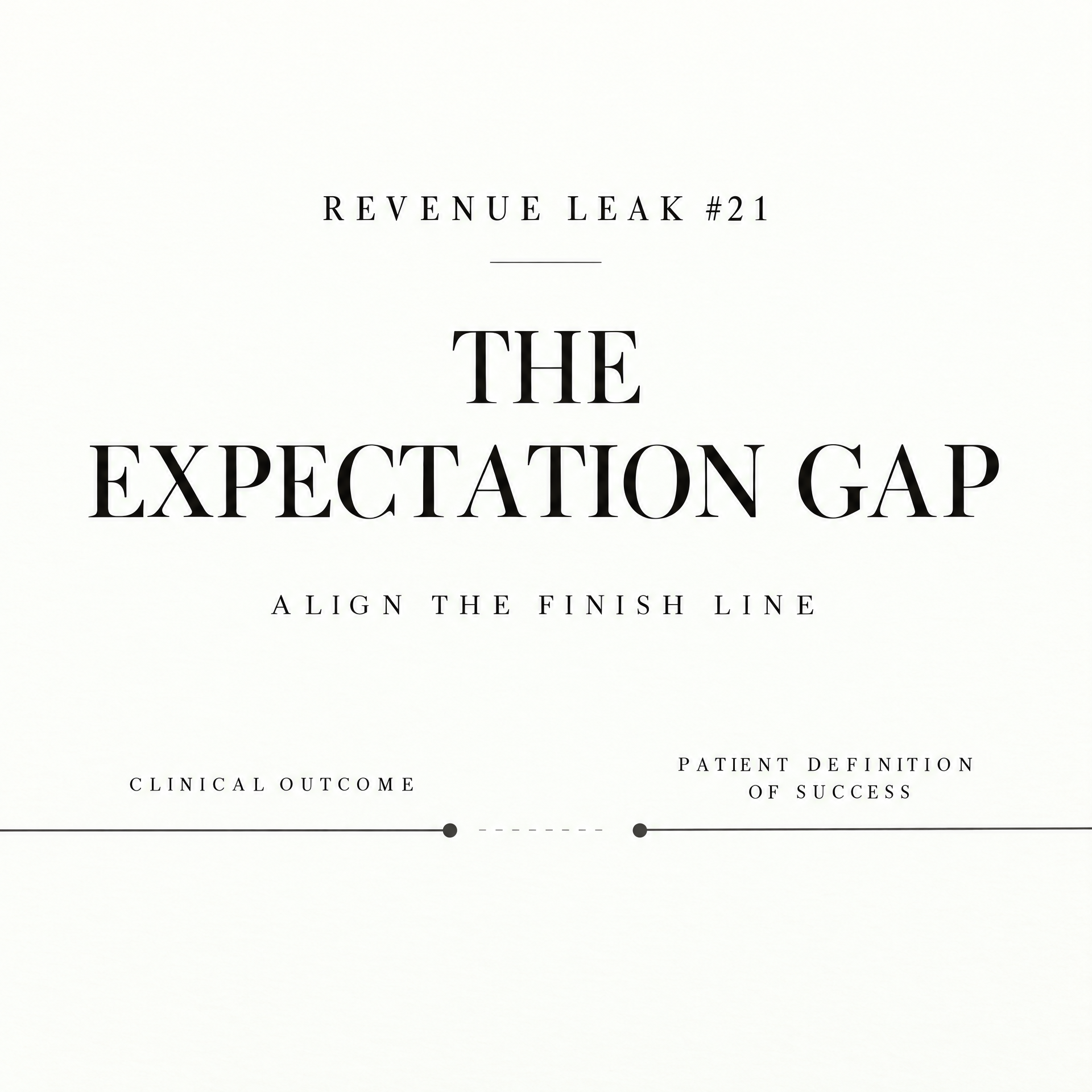
Revenue Leak #21: The Expectation Gap — When the Planned Result Is Not the Patient’s Definition of Success
A treatment plan can be clinically correct and still feel unclear to the patient when the practice’s definition of success differs from the patient’s. Revenue Leak #21 shows how to align the finish line before the case loses momentum.
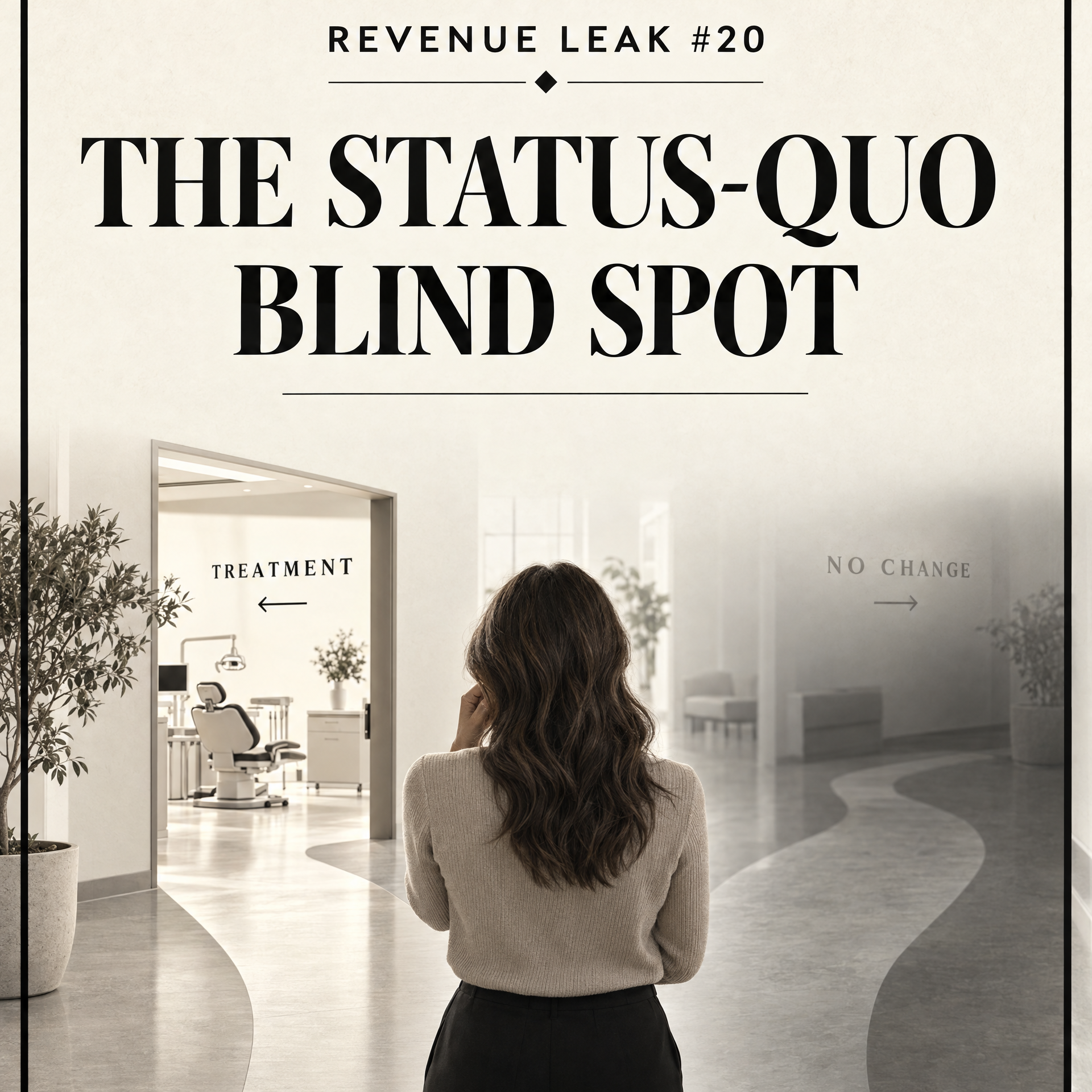
Revenue Leak #20: The “Status-Quo Blind Spot”
When a treatment conversation explains the proposed care but never makes “no change” visible, the patient may default to the status quo without understanding what that choice means. Revenue Leak #20 shows how to make the decision complete without pressuring a yes.

Revenue Leak #19: The “Choice Overload Leak” — When Too Many Treatment Options Stall a Yes
Offering clinically appropriate alternatives is not the problem. The leak begins when a patient receives a list of options without a clear connection to what matters most, a recommended path, or a defined next decision. Revenue Leak #19 shows how practices can create clarity without pressure.
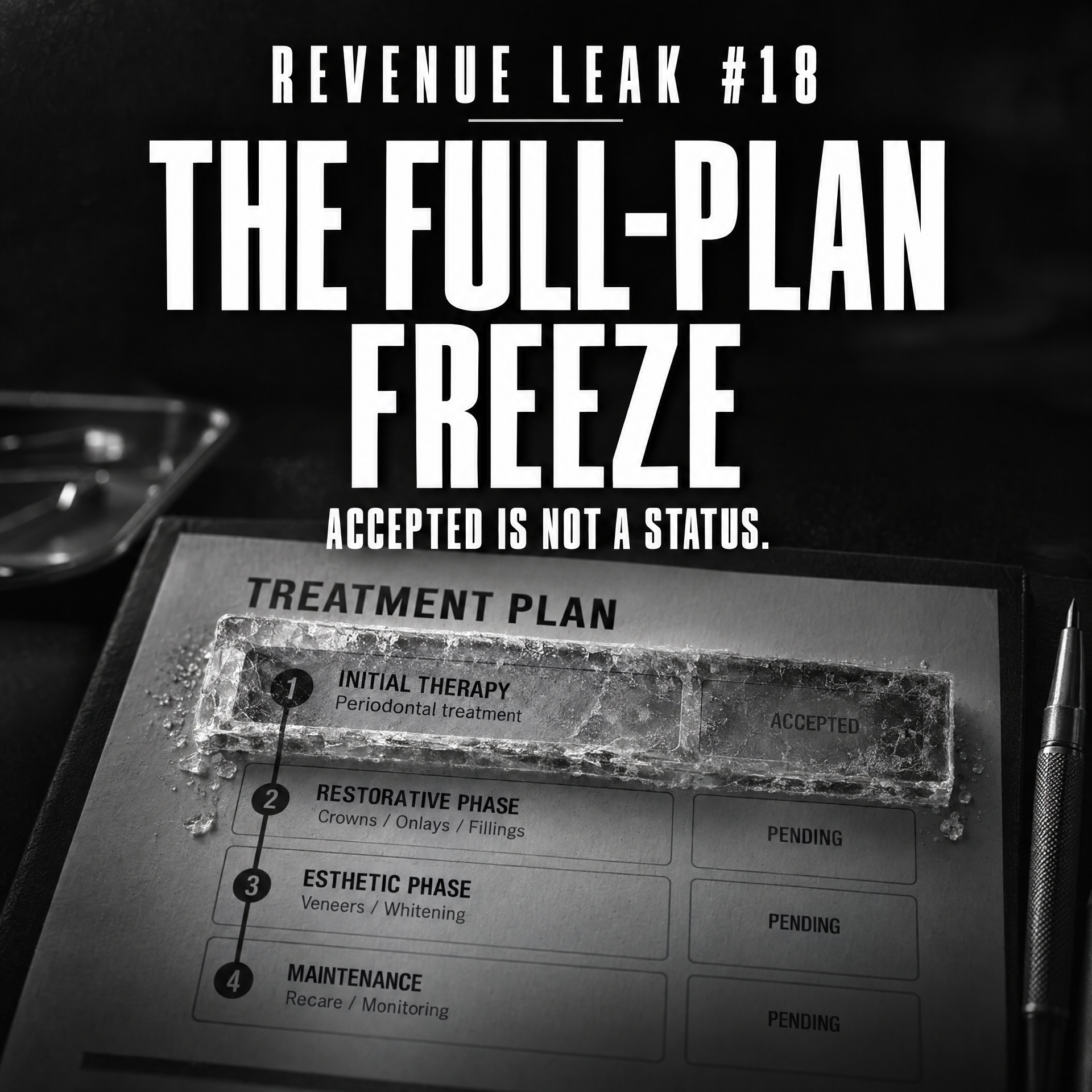
Revenue Leak #18: The “Full-Plan Freeze” — When a Big Treatment Plan Has No First Step
A comprehensive treatment plan can be clinically sound and still feel impossible to start. Revenue Leak #18 explains the Full-Plan Freeze: the moment a patient sees the entire scope of care but cannot identify the next manageable decision. Learn how phased sequencing, patient priorities, and a named first step help practices protect momentum.
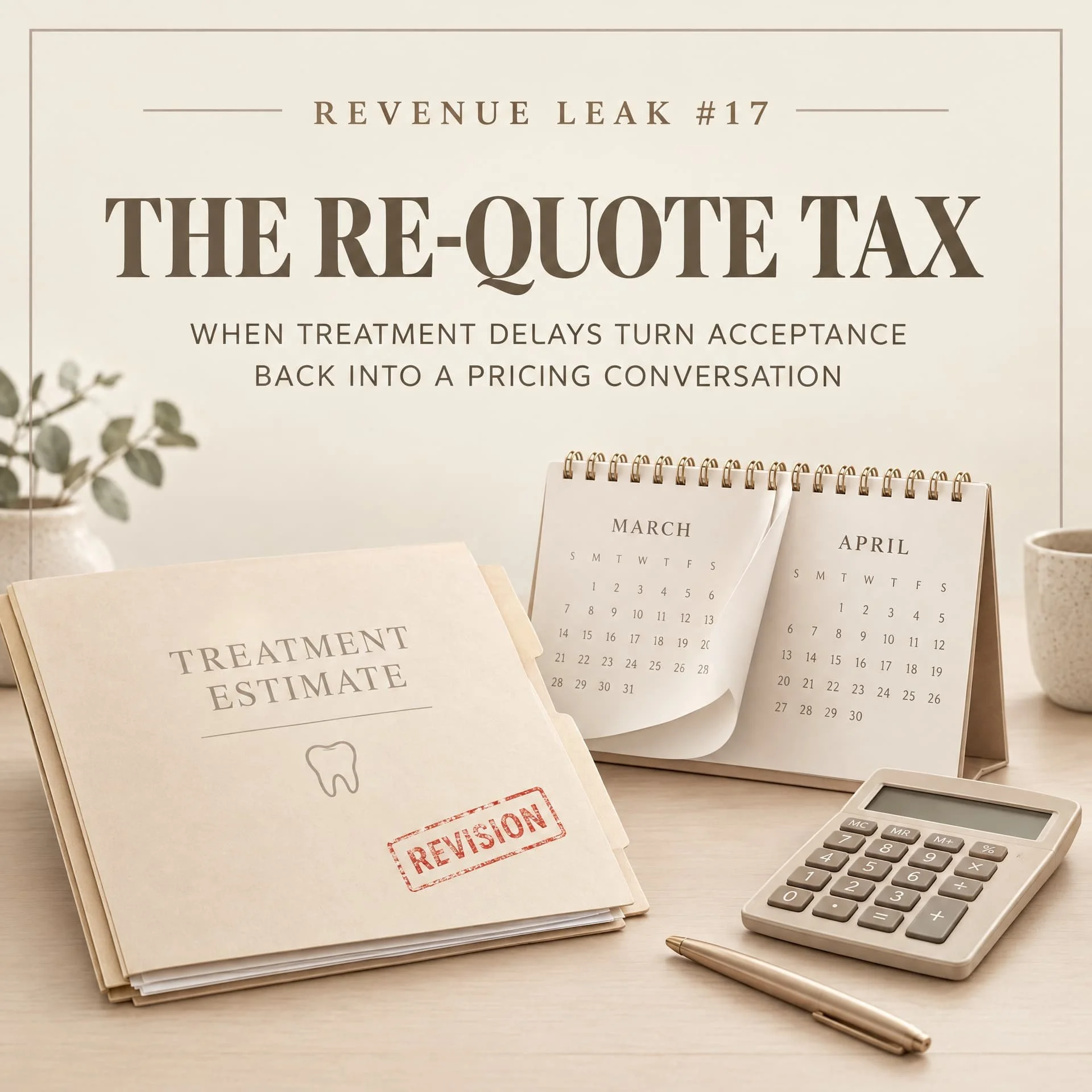
Revenue Leak #17: The “Re-Quote Tax” — When Treatment Delays Turn Acceptance Back Into a Pricing Conversation
A patient may be willing to proceed, but a delayed treatment plan can become a new financial conversation when eligibility, remaining benefits, fees, or assumptions change. Revenue Leak #17 explains the Re-Quote Tax and shows practices how to protect momentum with dated estimates, clear assumptions, and a defined decision window.
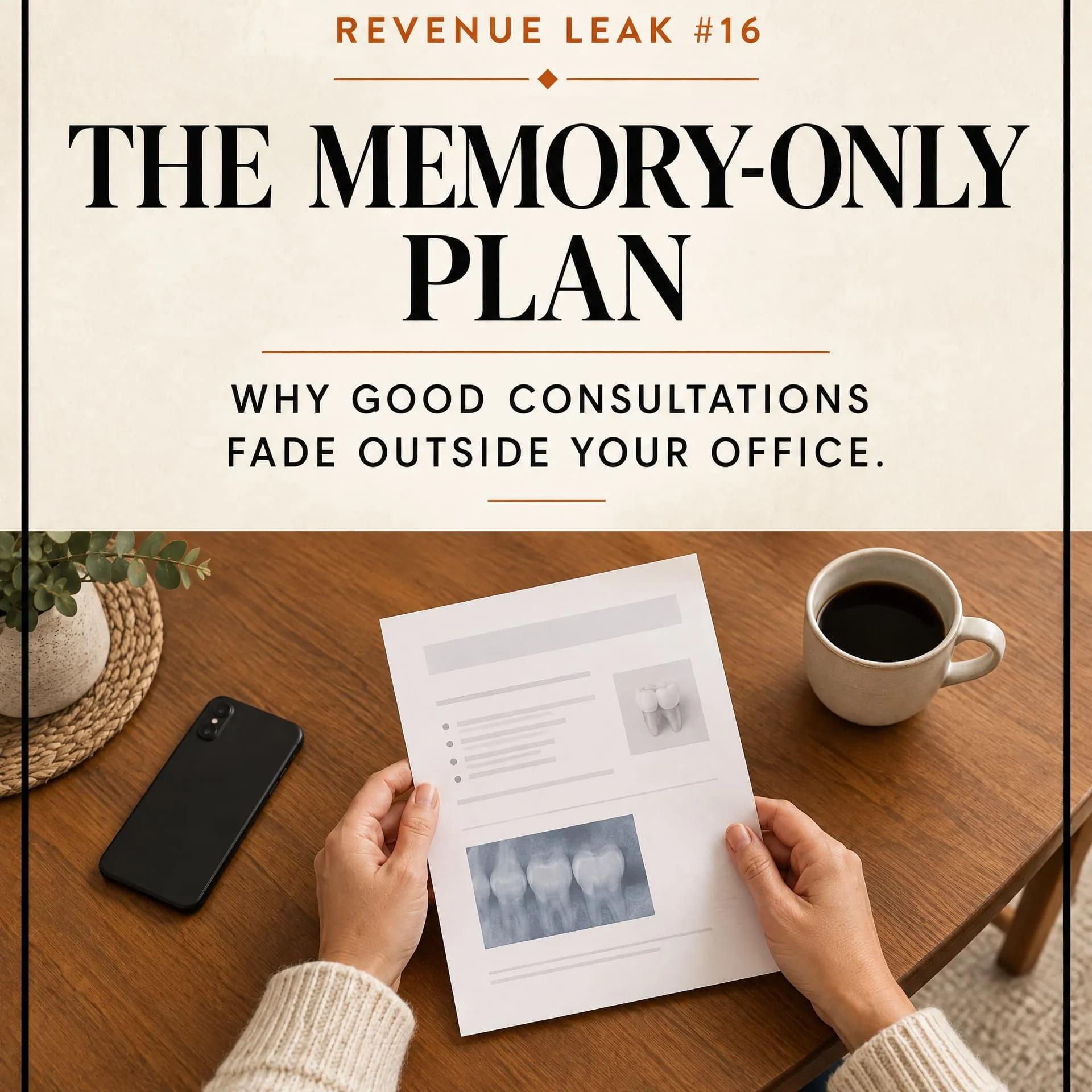
Revenue Leak #16: The “Memory-Only Plan” — Why Good Consultations Fade Outside Your Office
A patient can agree with the diagnosis in the operatory and still leave without a clear decision path. When the recommended care, patient priorities, options, financial next step, and follow-up owner exist only in conversation, the treatment plan becomes a Memory-Only Plan. Revenue Leak #16 shows how a patient-ready decision record and teach-back process can protect clarity after the consultation ends.

Revenue Leak #13: The “Price Objection Myth” — Why Patients Say No to Needed Treatment
When patients say, “That’s too expensive,” the real objection is often not the price. It is a gap in perceived value, trust, clarity, or financial confidence. Discover why the Price Objection Myth quietly turns diagnosed care into lost production—and how to help patients say yes to the treatment they need without pressure.
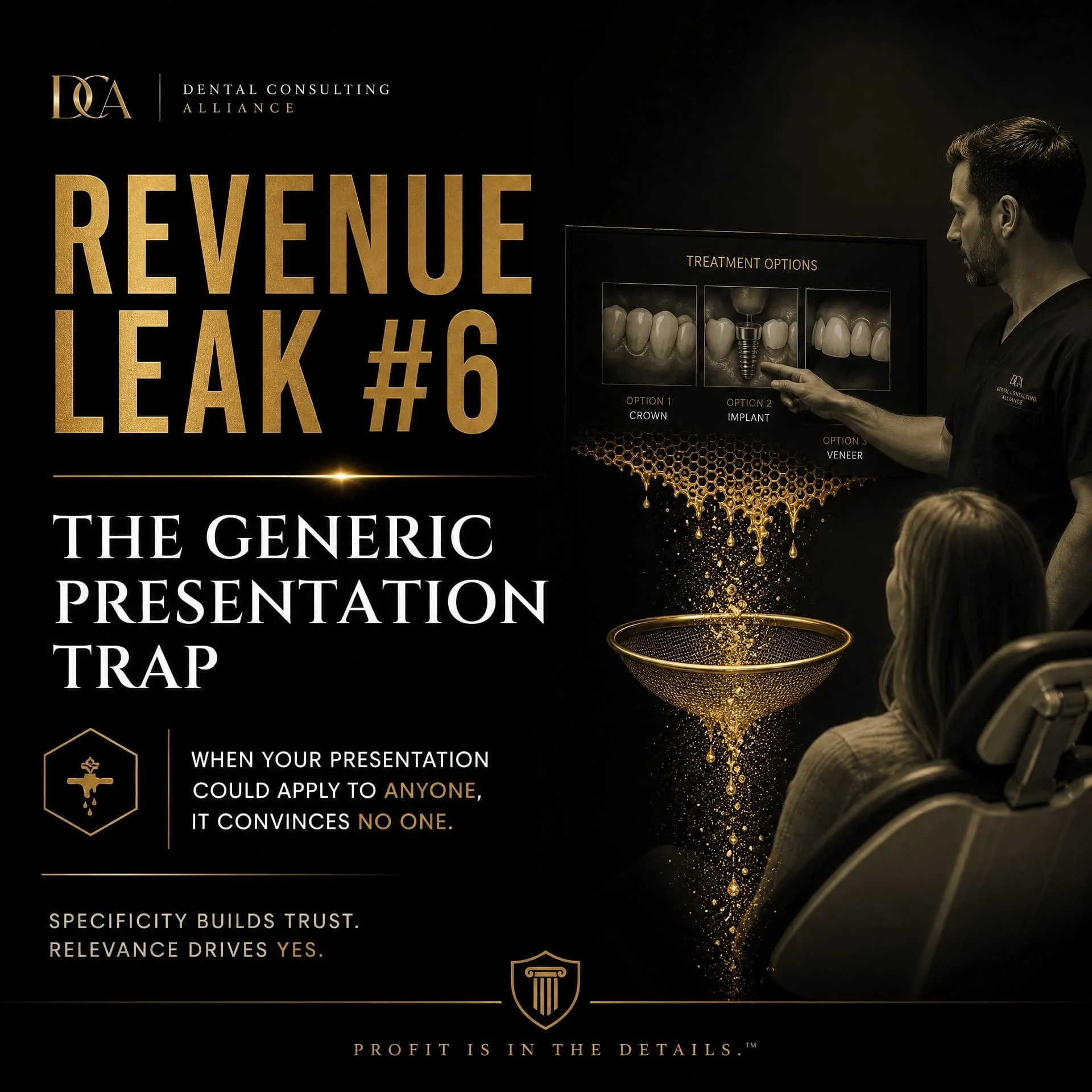
Revenue Leak #6: The Generic Presentation Trap
Discover how generic treatment presentations are silently costing your high-ticket dental practice millions in lost revenue and learn the strategies to personalize your approach for higher case acceptance.
Revenue Leak #3: The Ghosted Follow-Up
Most practices lose high-value cases in the first 48 hours post-consultation. This is the "Momentum Fade"—the direct aftermath of the "Silent No." Learn how to bridge the gap with asynchronous engagement and stop the ghosting.

Revenue Leak #2: The Silent No (The Unasked Financial Question)
Patients rarely say "No" because they don't want the result. They say "I need to think about it" because they haven't been given a clear path to pay for it. Here is how to plug the leak.